Why I Was Heckled on Yom Kippur
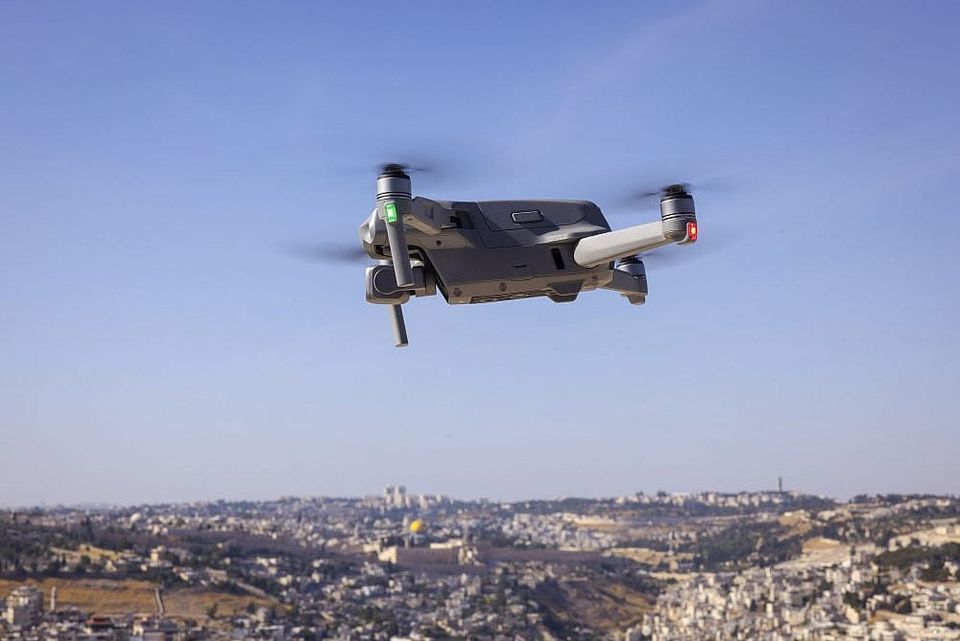
In my 34-year career as a rabbi, I’ve been heckled only once during a High Holiday sermon. (I’m not sure if I should consider this to be a mark of pride or sign that I should have tried harder.) Interestingly enough, the fracas had nothing to do with Palestine/Israel; it occurred in 2011 during a Yom Kippur sermon entitled, “War Without End,” in which I criticized American empire and its spread of militarism around the world. The flashpoint for the outburst occurred when I brought up Obama’s targeted drone assassination of Anwar al-Awlaki, a radical cleric, Al-Qaeda propagandist – and American citizen:
Many of us had hoped that Obama … would turn back the Bush doctrine and steer our nation’s foreign policy toward a saner course. But as it has turned out, the very opposite has happened. He has embroiled us in even more Mideast wars and has deployed even larger numbers of special operations forces to that region. He has also transferred or brokered the sale of substantial quantities of weapons to these countries and has continued to build and expand US military bases at an ever-increasing rate.
He also promised to prosecute the so-called “War on Terror” with greater attention to civil liberties, but that hope has been fairly dashed as well. During his campaign, note what he had to say about this subject:
As president, I will close Guantanamo, reject the Military Commissions Act, and adhere to the Geneva Conventions. Our Constitution and our Uniform Code of Military Justice provide a framework for dealing with the terrorists. Our Constitution works. We will again set an example for the world that the law is not subject to the whims of stubborn rulers, and that justice is not arbitrary.
Well, it’s over two years later and Guantanamo is still open. This past March, the Obama administration announced it would be resuming military tribunals there. And just last week, we learned that our President did something truly unprecedented – our President actually approved the extra-judicial assassination of an American citizen in Yemen.
At that point someone (to this day I don’t know who) stood up and yelled, “I take exception to what you are saying!” He went on to say something else but was immediately drowned out by someone who shouted, “Why don’t you sit down and shut up!” Then there was some more general shouting and things pretty much spiraled out of control from there. It was not, needless to say, the kind of atmosphere one seeks to cultivate on Yom Kippur.
I don’t remember how long it lasted, but I do remember stepping back, hoping against hope that the fire would burn itself out. At some point it did, allowing me to continue:
Now I know there are many out there, including many liberal folk, who aren’t expressing over-concern about this incident. It is certainly true, Anwar al-Awlaki was a radical Muslim cleric, and yes, his language and speeches were incendiary. He may even have plotted against the United States – but we will never know that for sure because he was never indicted for a crime. What we do know is that Yemen experts said he was a minor player – and that he likely had no operational connection to Al Qaeda. But again, we’ll never know that for sure. What we do know is that Mideast extremists now have a new martyr and we have crossed a terrifying Rubicon: our government now openly assassinates its own citizens without due process.
Not surprisingly, my post-service reviews were mixed. Some felt I’d gone too far to criticize a president who was so universally beloved by liberals, particularly following the horrors of the Bush years. Others understood what I was trying to say, however bluntly: that Obama had betrayed his campaign promises to end Bush’s war on terror and was, in fact, building on it.
As if amplify that point, a few weeks later Obama approved a drone attack in South Yemen that killed al-Awlaki’s teenage son Abdulrahman, along with his cousin and five other civilians. He had committed no crime other than, I suppose, being his father’s son. In a New York Times op-ed his grandfather Nasser described Abdulrahman, as “a typical teenager” who “had a mop of curly hair, glasses … and a wide, goofy smile, (who) watched “The Simpsons,” listened to Snoop Dogg, read “Harry Potter” and had a Facebook page with many friends.” Nasser pleaded, to no avail, for answers about the murder of his grandson, writing, “The government has killed a 16-year-old American boy. Shouldn’t it at least have to explain why?” While the Obama administration eventually claimed responsibility for the killing of the younger al-Alwaki, it would only comment, cryptically, that he was not “specifically targeted.”
Many don’t remember (or don’t wish to remember) the expansion of American militarism – particularly the drone wars - under the Obama administration. Obama actually oversaw more drone strikes in his first year than Bush carried out during his entire presidency – and ten times more in the covert war on terror than under the previous regime. According to the Bureau of Investigative Journalism, Obama approved a total of 563 strikes targeted Pakistan, Somalia and Yemen during his two terms, killing between 384 and 807 civilians.
In weekly meetings known as “Terror Tuesdays,” Obama would essentially serve as judge, jury and executioner, personally approving kill lists for drone strikes. In his memoir, A Promised Land, Obama wrote unabashedly about giving permission for extrajudicial executions using “vital statistics reminiscent of those on baseball cards” because “this new, liberal president couldn’t afford to look soft on terrorism.” Years later, human rights lawyer Clive Stafford Smith pointed out the irony that “the law professor who opposed the racist imposition of the death penalty by state courts jettisoned all his principles in the interests of domestic poll numbers and applied the death penalty without trial exclusively to Muslims.”
After years of silence over his use of drones and baseball-card kill lists, Obama finally addressed his policy in a 2013 speech at National Defense University. Defending his use of drones to kill (by then) four American citizens, Obama invoked just war theory: “We are at war with an organization that right now would kill as many Americans as they could if we did not stop them first. So, this is a just war - a war waged proportionally, in last resort, and in self-defense." Almost as an afterthought, he assumed the mantle of liberal caution, adding, “America's legitimate claim of self-defense cannot be the end of the discussion. To say a military tactic is legal, or even effective, is not to say it is wise or moral in every instance."
Thirteen years after that speech, we can easily see the disingenuous naivete of his claim that the use of drones could be contained “as a last resort and in self-defense” in a “wise” and “moral” manner. Despite Obama’s protestations, his expansion of the drone program opened a Pandora’s Box that has brought us to a terrifying moment in the history of warfare. The “targeted” use of drones has led to a dramatic rise in civilian casualties during wartime. As a Just Security report concluded last year “Drones are transforming warfare at a rapid pace that states have not yet been able to fully grapple with … The technology that has revolutionized the battlefield will also redefine human experiences of war for the worse, expanding the scale of human suffering.”
Nowhere is scale of human suffering more evident than in Gaza. Well before Israel’s genocide commenced in 2023, the ubiquitous presence of drones was well-known to Gazans, who coined the word zenana (Arabic for “nagging”) to refer to the incessant, traumatic buzzing that has become an everyday fact of life. During Israel’s blockade, zenana was, in the words of Hamdi Shaqura, of the Palestinian Centre for Human Rights in Gaza City, “the sound of death. There is no escape, nowhere is private. It is a reminder that, whatever Israel and the international community assert ... (we) are still living completely under Israeli control. They control the borders and the sea, and they decide our fates from their position in the sky.”
Israel’s use of drones in Gaza, of course, has not been limited to surveillance. The Israeli military has been using quadcopter drones extensively to commit “premeditated murders, extrajudicial executions, and judicial killings.” According to myriad of witnesses, press reports and documentation by human rights groups, the Israeli military has regularly engaged in the widespread use of quadcopters to specifically target Palestinian civilians. In the words of the organization Euro-Med Monitor, “Israeli sniping operations, killings, and executions primarily target unarmed civilians in shelter centers, hospitals, streets, and populated residential areas; these civilians pose no threat or danger to anyone, as they are not participants in any hostilities.”
Drone warfare has also had a devastating impact in Sudan. According to the Armed Conflict Location and Event Data project, at least 2,670 people, including combatants and civilians, were killed by drones in 2025, marking a 600% increase in drone-related deaths and an 81% increase in drone attacks compared to the previous year. According to the UN High Commissioner for Human Rights, “armed drones have now become by far and away the leading cause of civilian deaths (in Sudan).”
For its part, Russia has been actively using quadcopters on civilians during its war on Ukraine as well. Thousands of Ukrainians have been killed and injured by Russian drone strikes since its full-scale invasion, with short-range drones emerging as the deadliest weapon for civilians in frontline areas. Last Thursday, it was reported that Russia pummeled Kyiv with a barrage of 1,428 drones and decoys in a 24-hour period, killing 24 and injuring dozens of others. Last year, Human Rights Watch released a report documenting “how Russian forces appeared to be deliberately or recklessly carrying out drone strikes against civilians” in the Southern city of Kherson, killing dozens and injuring hundreds and causing massive depopulation of the region.
Drones are also proving effective for less powerful militaries in asymmetrical wars. Iran has launched hundreds of its Shahed drones to attack the air defense systems of Israel, the US, and its partners in the Middle East. While most are being intercepted, this inexpensively made drone has often effectively tied up US air defenses. Ukraine is also using cheap Interceptor Drones to defend its cities, infrastructure and civilian lives. In an ironic kind of escalation, the US is now turning to Ukraine for aid and technical drone expertise in its war on Iran. In other words, the use of drones is expanding in every direction – and civilians are largely paying the price.
Here in the US, there is every indication that the use of military grade drones is expanding domestically as well. This past January, the Department of Homeland Security announced it would be investing $115 million to create a new office dedicated to “rapidly procuring and deploying drone and counter-drone technologies … to secure the border and cripple the cartels, protect our infrastructure, and keep Americans safe as they attend festivities and events during a historic year of America’s 250th birthday and FIFA 2026.”
The ink was barely dry on that announcement when the inevitable occurred: last March, there were numerous reports of drone sightings during Operation Metro Surge. One anti-ICE activist told a reporter she saw a drone outside her second-floor bedroom window that flew off when she got her phone. Other observers in the Twin Cities “have documented dozens of other possible sightings, cross-referencing them with aircraft flight plans to be sure that they weren’t mistaking planes for drones.” Another activist reported, “It’s very reminiscent of 1984, and that surveillance state — that’s very much what it feels like they’re trying to achieve … It’s up to all of us to recognize that and push against it, because I don‘t think that is the country that any of us want to live in.”
And if all this wasn’t enough to convince us of the scourge that is drone warfare, consider this: there is ominous evidence that American neo-Nazi terrorist groups are planning to use drones “as a critical weapon in their own future war against the US government."
According to The Guardian:
The FBI has major concerns about the accelerationist neo-Nazi sect on the far right – one calling for an insurgency against the US government – and other ultra-violent actors in the same ideological space, eyeing the use of FPV drones for domestic attacks.
These same actors have a demonstrated track record of targeting critical infrastructure and planning high-casualty events, with the current proliferation and accessibility of FPV drones being a boon to those types of plots. More worryingly, evidence has emerged of military-trained neo-Nazis with relevant skillsets having pinpointed the drones as a potential tool.
This is very definition of blowback: the American government, which uses drones to attack countries in foreign wars and surveille its own citizens at home is now concerned that neo-Nazis are planning to use drones in order to bring down the American government.
Last Passover I quoted the famous Talmudic quote in an exploration of the Tenth Plague in the Exodus story: “Once the Destroyer is given permission to destroy, it does not distinguish between the righteous and the wicked.” As I wrote at the time:
When collective violence is unleashed upon a population, it does not discriminate between combatants and civilians, young and old, medical workers or first responders, reporters or press personnel. Moreover, once the Destroyer is let loose on its murderous rampage, it is very difficult, if not impossible, to hold it back.
In an important article in +972mag about the history of Israel's use of drones, journalist Sophia Goodfriend wrote:
The French philosopher Gregoire Chayamou describes drone warfare as “war without victory.” Living under constant siege is so dehumanizing, Chayamou says, that often drone warfare pushes more people to take up arms and join whatever militant organization is being targeted. And so, the aim of drone warfare is quickly reduced to eradicating an ever-growing list of targets, which rationalizes more investments in the very technologies — higher resolution images, quieter engines, and better missiles — that make warfare drag on.
Make no mistake: every advance in war technology has one aim only: to kill more people more effectively. The Destroyer has been given permission to destroy on a level that is terrifying to witness. In 2013, the claim that one could use drones to wage a just war “proportionally, in last resort and in self-defense” may have seemed naïve at best; today it represents a dangerous apologetic for domestic surveillance, mass murder and even genocide. There can be no more illusions about the technological scope of weapons designed with no other purpose than to destroy and kill – and the willingness of state actors to use them with impunity.
I’ll end with the closing words from my offending Yom Kippur sermon:
I hope that as Jews, we might at least be able to have this conversation: as citizens of a nation engaged in war without end, how seriously will we honor a spiritual tradition that demands we pursue peace at all costs? How seriously will we heed a historical legacy that has witnessed all too well the price of empire? Is this really the kind of Jewish voice, Jewish vision, we want to hand over to the next generation? Or do we want to reclaim our prophetic voice and vision – one that speaks truth to power and points out the hard lessons of history?
Member discussion