It's Not About Us: A Response to a New York Times Op-Ed
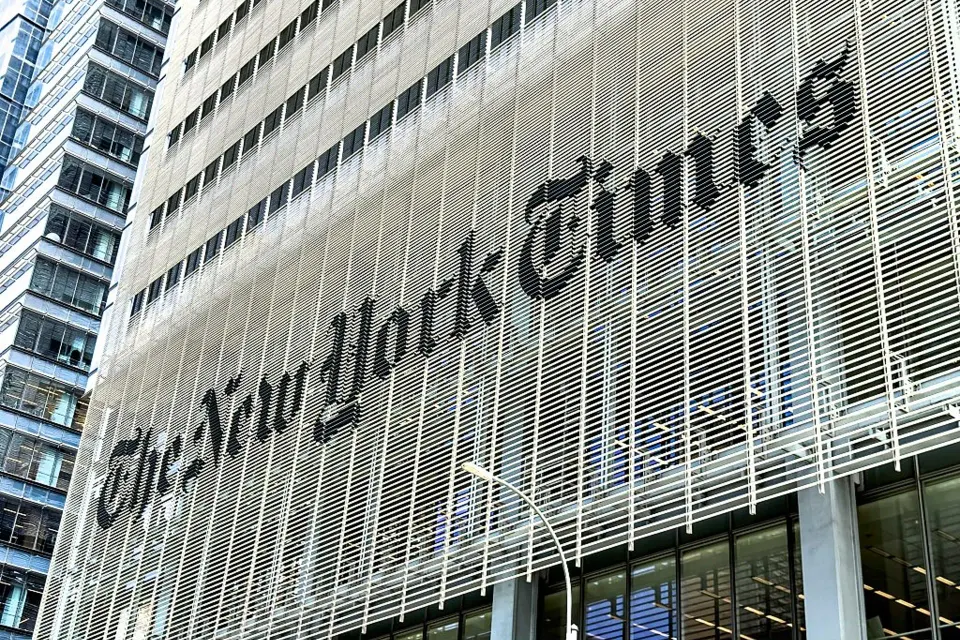
With all that’s going on in the world, the editorial desk of the New York Times somehow found it important to publish two op-eds in defense of Zionism in less than a week. The first, “What Zionism Has Always Meant,” by Yeshiva University president Rabbi Ari D. Berman, was boiler plate pro-Israel hasbara and frankly the less said about it, the better. The other, “A Profound Question Haunting Jews Today,” a longish, personal defense of Zionism by Columbia journalism scholar Nicholas Lehmann, was more sophisticated and thus much more troubling than the Berman piece. And since his article has been sitting uncomfortably in my gut for the past week, I thought I’d offer a few thoughts in response so I can move on with my life.
He begins by describing his upbringing in New Orleans, a subject he’s written extensively about before. Lehmann was raised in a classical Reform anti-Zionist household by a father who “considered himself a Southern gentleman, was neither liberal nor Zionist (and) was deeply uncomfortable with the standard-issue American Jewish positions of the day.” Although he was bequeathed an ambivalent Jewish identity, Lehmann writes he has since “moved toward the way of being Jewish that my father rejected,” i.e., he became a liberal American Zionist who lives in New York City and attends a Conservative Jewish congregation.
He describes his own personal transformation as a microcosm of a larger “20th century, American version of Jewish emancipation,” in which “one could achieve — through being successful, culturally Jewish, Zionist, liberal and not especially observant — the blended status that has persistently eluded Jews.” This idyllic period, however, came to an end on October 7, which somehow changed the rules for American Jewish identity: “With jarring suddenness, it now seems no longer possible to be at once comfortably Jewish, and also Zionist, and also liberal, and also fully accepted outside the Jewish world.”
Thus, the “profound question” of the article’s title. Given this new reality, American Jews have a choice to make: they must either sacrifice their insider status or let go of their Zionism. Not surprisingly, Lehmann opts for Zionism. To be expected to give it up, he writes dramatically, would be tantamount to asking “us to give up on a portion of our souls:”
The main story line of the Hebrew Bible is of an exiled people’s search for a homeland. Long before Herzl, Jews prayed facing Jerusalem, and at least notionally have longed for the rebuilding of the Temple there. Zionism touched a deep collective yearning for self-determination, for self-protection, for freedom from perpetual outsider status. All this makes the idea that Israel and Zionism can easily be factored out of American Jewish life seem almost fantastical.
By choosing to uphold Zionism, however, American Jews will have to learn to live with the discomfort that comes with a return to outsider status. We must “adjust our expectations” and accept that that “Jewishness can ever be entirely comfortable or that our identity can be made to comport seamlessly with some set of universal ideals” and that we are “historically, and in the present much more outsiders than insiders.”
It’s really quite flabbergasting that Lehmann equates liberal Zionism – the quintessential insider position if ever there was one – with outsider status. While it’s true that the narrative on Israel has flipped since October 7, it’s still hard to imagine a Jewish liberal Zionist who lives in New York City describing himself as an “outsider.” I don’t doubt that as a Columbia professor, the student encampment protests of 2024 were uncomfortable for him, but given the fierce punishments levied against the student protesters and university’s capitulation to the Trump administration’s demands to reign in “campus antisemitism,” it’s worth asking, “who are the real outsiders here?”
On a deeper level, I found Lehmann’s insistence that Zionist Jews should embrace the position of outsider to be more than a little odious, reminding me of the Jewish neo-conservative meme that asserts when push comes to shove, Jews are just fated to be marginalized by a hostile world. (If you want to read a colorful example of this mindset, check out “All the World Wants the Jews Dead,” the infamous screed written by Jewish writer Cynthia Ozick for Esquire magazine in the wake of the 1973 Yom Kippur War.) Lehmann is essentially reveling in a similar Jewish particularist exceptionalism here, advocating a retrenchment from the world where "solidarity" can only mean solidarity with other Jews.
He then goes on to suggest:
My own advice for the perplexed among liberal American Jews would be, first, participate actively in the religious life of the community. That will connect you deeply to your people, back through time and everywhere in the world in the present. Second, and inextricably linked, study the Torah and the other essential texts.
There you will encounter anything but a world of simple moral verities. Our patriarchs and matriarchs were all deeply flawed people, and the consistent failings of our people were collective as well as individual. Understanding that makes for a much better vantage point from which to contemplate the situation of Israel today than being subjected to litmus tests about Zionism from people who don’t understand how deeply embedded it is in most Jewish hearts.
It’s striking that Lehmann’s romantic solution for American Jews is to recede into religious life, where we can treat Israel’s decades-old oppression of the Palestinian people as just one more thing for Jews argue and debate. To my mind this solution raises an even deeper religious problem: to debate a genocide as it continues to unfold is, quite frankly, a sacrilege. Jews of all people should know that while debate is a central value in our tradition, some moral issues – like genocide denial - transcend debate. Every reputable human rights agency, genocide scholar and court of international law has determined that Israel’s ongoing military actions in Gaza constitute a genocide. This is not an issue for us to debate. It’s a moral atrocity that we must do everything in our power to end.
Yes, many Jews currently consider it unthinkable to give up on the Zionism that is “embedded in their hearts.” But this reality may well not be as immutable as Lehmann thinks. While he claims that “the idea that Israel and Zionism can easily be factored out of American Jewish life (is) almost fantastical,” it’s worth noting that when political Jewish Zionism came on the scene in the 19th century, the very idea of a Jewish sovereign state in Palestine itself felt fairly fantastical. By Lehmann’s own reckoning, it was only generation ago that anti-Zionism was a reasonable American Jewish position. So no, there is nothing inevitable about Zionism in American life. If we’ve learned anything at all from history, it should be clear to us that while colonial empires may rise and fall, resistance to them will always be inevitable.
On the most basic level, the essential problem with Lehmann’s op-ed – and Rabbi Berman’s for that matter – is that the word “Palestinian” is nowhere to be found in either. The challenge they ponder is an exclusively Jewish challenge - and the Palestinian people are simply a non-issue. Lehmann dismissively treats the genocide as an inconvenience that has disturbed our comfort, divided our community and set us at odds with an increasingly anti-Israel world. This kind of analysis has become the boiler plate liberal Zionist approach to the genocide: the emphasis is not on the atrocities committed by Israel that openly unfold every day before us, but what it is doing to our community and our place in the world.
In other words, it is all about us. The tragedy is not the carnage Israel regularly inflicts on the Palestinian people – rather, it is the “forced choices between Zionism and membership in the progressive world and often bitter private conflicts within congregations and families.” This breathtaking moral myopia reminds me of the old Jewish jokes that perennially end with the punchline, “…yes, but is it good for the Jews?”
This overt deference to the Zionist narrative is, of course, is not simply a problem of these op-eds; corporate media is notorious for this kind of racist practice and in many ways, the New York Times is Exhibit A. While the Times has many pro-Israel Jewish staff writers on its roster who regularly contribute to the editorial pages – I can think of Bret Stephens, Thomas Friedman, Michelle Goldberg just off the top of my head – there are no Palestinian journalists on the Times’ staff. The underlying assumption is that Palestinians would be unduly biased - a concern that is clearly not extended to American and Israeli Jewish staff writers.
The ad hoc group Writers Against the War on Gaza has produced an extensive dossier that exposes the Time’s deep pro-Israel bias and documents deep disparities in the Times’ reporting on Israel/Palestine and their research is indeed deeply damning. In addition to the large number of pro-Israel reporters, it also reveals critical data about content, noting for instance that since October 7, the Times reported on antisemitism five times more often than Islamophobia, quoted Israeli and American sources more than three times as often as Palestinian sources that Israeli and American officials quotes outnumber Palestinians nine to one.
Holding the corporate media accountable is not just a rhetorical exercise - the editorial bias and slated reportage has real life impact on real lives. I recently finished - and highly recommend - the book "How to Sell a Genocide: The Media's Complicity in the Destruction of Gaza," by media critic Adam H. Johnson, who systematically lays out how the mechanics of propaganda amplify the Israeli narrative, making the media literally complicit in the genocide against Palestinians in Gaza.
Of course, at its most heinous level, this erasure of Palestinian voices is occurring literally every day as Israeli continues to assassinate Palestinian reporters for the crime of reporting on their own genocide. Ultimately, the erasure of the Palestinian narrative is inseparable from Israel's attempted erasure of the Palestinian people - a reality that exposes the abject hollowness of Lehmann’s claim that American Jewish Zionists are somehow the outsiders in this narrative.
Yes, there is a profound question haunting American Jews today, just not the one posed by Nicholas Lehmann. Namely, will we retreat into a defensive, performative “outsider” status, or will we respond with a commitment to amplify the voices of those who are struggling every day against their own annihilation?
Member discussion