Our War on Persian Civilization
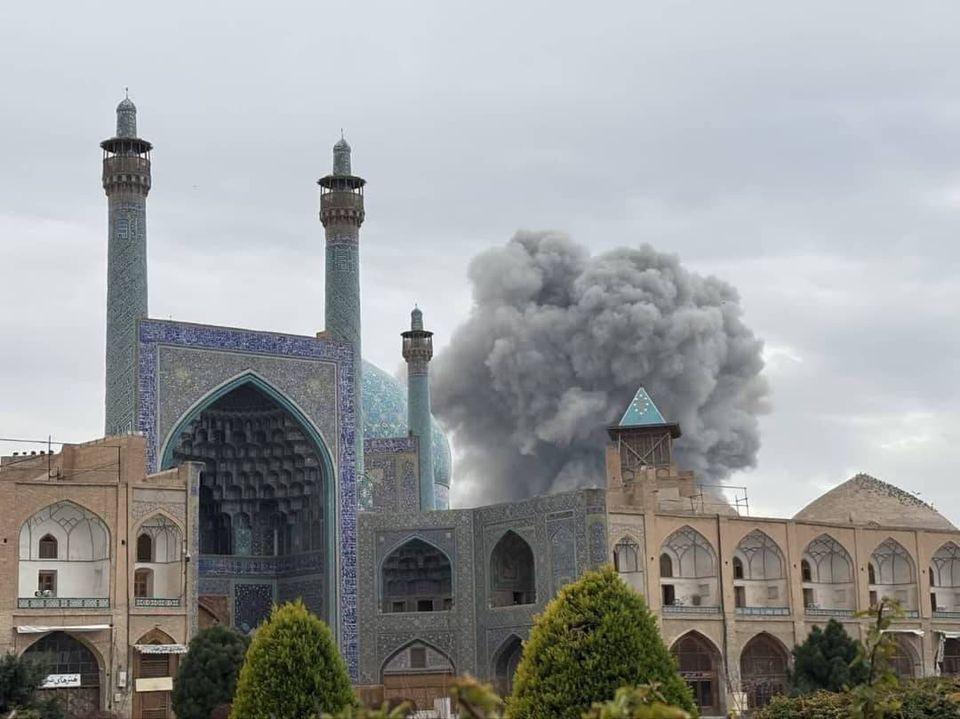
A whole civilization will die tonight, never to be brought back again. I don’t want that to happen, but it probably will. (Donald Trump, April 7, 2026)
As frightening as it was, Trump’s recent social media threat to destroy Iranian civilization was not a first. Throughout his tenure, George W. Bush made it clear that “all options were on the table” regarding Iran, including a pre-emptive nuclear first strike. In 2008, then presidential candidate Hilary Clinton threatened to "totally obliterate" Iran if it launched a nuclear strike against Israel. (Of course, Israel was and is the country that maintains a nuclear arsenal, not Iran.) Another presidential candidate, John McCain, once sang “bomb, bomb, bomb Iran” to a Beach Boys melody at a campaign event.
The obvious difference now is that Trump has followed through on his threat, with results that have caused immense tragedy for the people of Iran, massive regional instability and shock waves through the global economy. Amidst it all, Trump continues to threaten the annihilation of Iran via sickeningly casual social media messages. We cannot and should not dismiss his posts as typical Trumpian rhetoric. As human rights scholar Mathias Risse has pointed out, his words represent a "speech act that is already a crime:"
Trump's statement — issued on the morning of a self-imposed deadline, to an audience of millions, by the commander-in-chief of a military actively striking Iran — is such a threat. It is not background noise. It is a weapon. The 90 million Iranians who read it, heard it, or had it reported to them felt its massive weight as a physical fact. Nor is the distress of their relatives abroad — people who woke up that Tuesday morning to learn that a president with unmatched military power had vowed their civilization would not survive the day — a secondary or incidental harm. It is the primary and foreseeable effect of the statement.
Over the past few months, I’ve been thinking a great deal about the actual civilization that Trump so regularly and casually threatens to destroy. I have no doubt that his view of Iran begins and ends with his own Islamophobic ignorance - a view that is likely shared by too many Americans. Little do they know, or care, that Persian civilization is one of the oldest, most venerable living civilizations that still exists in the world. To threaten the obliteration of such a culture is only one of the many sacrileges that has been perpetrated on Iran over the past several months.
In December 2008, I had the very good fortune to experience Persian civilization up close during visit Iran on an interfaith delegation with the peace and justice organization, Fellowship of Reconciliation. At the time, the president of Iran, Mahmoud Ahmadinajad, had become notorious for making venomous remarks toward Israel and engaging in Holocaust denial. In the organized Jewish community, Amadinajad - and Iran - were Public Enemy #1. Nevertheless, I viewed the opportunity to visit Iran at such a time as an invaluable opportunity and I leapt at it. By that time, I had been at my synagogue, Jewish Reconstructionist Congregation in Evanston, for ten years. While members of the congregation knew I was a politically oriented rabbi, visiting Iran was definitely next level, even for me.
I announced my intentions to go on the delegation in a Yom Kippur sermon, which was in large part a history lesson about American interventionism in Iran - and the blowback that continues to this day:
I do believe that most of us are ignorant of this history – and that we ignore it at our peril. We need to study and understand this history – and face up to our role in it – if we want to maneuver through our volatile relationship today. For most Americans, Iran is simply a belligerent regime that hates the West, supports terrorists and now, dangerously enough, is seeking nuclear capability. But to Iran, America is just the latest foreign power seeking to subjugate them to its will, a superpower that deposes regimes it doesn’t like, and now wants to deny Iran access to technology, modernism and independence.
To my surprise and relief, my sermon was very positively received. The synagogue board openly supported my decision. Two congregants even opted to go on the trip with me.
Our delegation consisted of Muslims, Christians and Jews and included visits to our religious counterparts in Iran. As I think back on our experience, my most vivid takeaway was the beauty, depth and all-pervasiveness of Persian culture throughout Iranian life. Everyone we met, whether they were Muslim, Christian or Jewish, told us that they considered themselves to be Persians first and foremost. Iranians are justifiably proud of their literary tradition. Every Iranian child has read Ferdowsi’s epic Shahnameh as well as national poets such as Hafez, Saadi and Rumi. Regardless of their faith community, everyone we met had a clear and deep connection to Persian history and culture, had their own favorite Persian poet, Persian folktales and Persian songs.
At one point we were told that it was customary for young Iranians to hang out at the tomb of their favorite poets, to recite their poetry, and meet other young people. When we were in the city of Shiraz, we saw this phenomenon up close: one Saturday night, we visited a cemetery where the tombs of the poets Saadi and Hafez are located. It was teeming with young people reciting poetry, singing songs, talking and laughing with one another. Though public displays of affection are outlawed by the Islamic regime, there was something deeply intimate about their interactions.
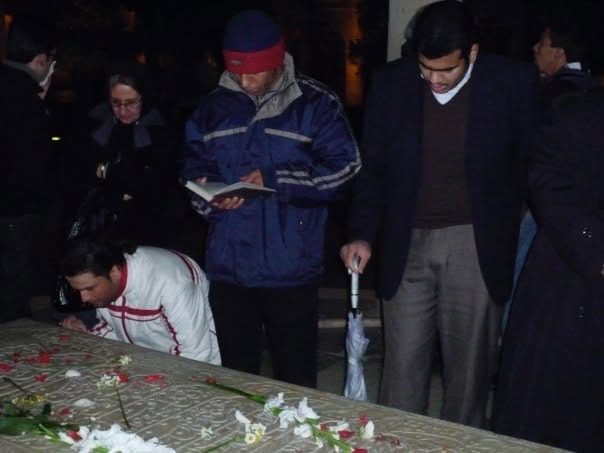
It was also clear to us that the Jewish community of Iran was likewise deeply immersed in the life of Persian civilization. The Jewish community of Iran is one of the oldest Jewish diaspora communities in the world, dating back to the Babylonian exile. There are roughly 10,000 to 15,000 or so Jews in Iran, and the community is fiercely proud of their Persian Jewish heritage. We met with Jewish community members in Tehran and Shiraz - and all of them stressed to us over and over that Iran was their home and that they felt comfortable living as a Jewish minority in an Islamic country, where Judaism has a protected status. While I have no doubt that the reality is complex for the Jews of Iran, there can be no doubt of their deep connection to their fellow Iranians and to their Persian identity in general.
On our very first day in Tehran, a group of us went for a walk down the street. Those of us in the Jewish contingent intentionally wore yarmelkas. Almost immediately, two men came up to us and asked, “Are you Jewish?” We looked at each other nervously and said, “Yes, we are,” They replied, “We’re Jewish!” We launched into a long, maybe hour-long conversation and they invited us to their synagogue the next morning for Shabbat services.
That evening we attended a Shabbat eve service at the Abed Yosef Synagogue. The sanctuary was breathtaking, the ark decorated by exquisite tiling and mosaic in the Persian/Middle Eastern style. Approximately 200 people participated in the service - and the vitality and vibrancy of the community was truly something to behold. In many ways, it felt very familiar: there were older men davening, people chatting animatedly, young children running and playing throughout the sanctuary. Everyone seemed utterly comfortable and safe in their spiritual home. Unlike most major synagogues in the US and Europe, there was no security at the entrance to the building - and in fact, no security anywhere that I could see.
I thought of that evening when I read last April that Israel had bombed and completely destroyed the Rafi’ Nia synagogue in Tehran during the holiday of Passover - an attack that traumatized the community was strongly condemned by Iranian Jewish leaders. Israel inevitably, expressed "regret" for the bombing, which they claimed was "collateral damage." While the attack destroyed Torah scrolls and historical sacred texts, thankfully, no one was killed. For me, this incident is just the latest example of how Israeli militarism continues to endanger Jewish lives - alongside so many others - in the name of “Jewish safety and security.”
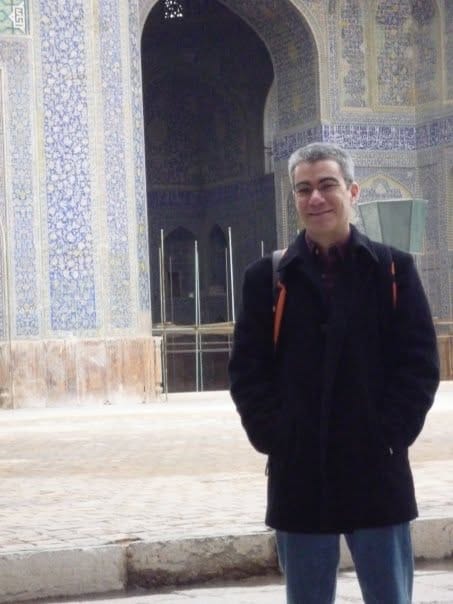
Almost twenty years after visiting Iran, my memories of that experience are still indelible. Everywhere we went on our trip, we were immersed in the history and beauty of Persian civilization. In the city of Esfahan, we spent an entire day visiting exquisite 17th century mosques made almost entirely out of deep blue mosaic tiles. We hiked around massive, majestic Imam Square, one of the largest city squares in the world. We went to Persepolis and hung out all day with a group of teenagers. We met a class of architectural students while touring mosques in Esfahan and encountered a large group of young school kids in Tehran, who peppered us nonstop with hilarious questions. In Qom, we talked with a group of Muslim seminary students along with their teacher, who was translating a book by Jewish American scholar Jacob Neusner into Farsi.
Today, as I read reports of the US and Israel sending bombs and missiles into the people and places we visited, these sacred memories are curdling into fear and anger. When I heard that the US military had bombed an elementary school in Minab, killing 168 school children, I thought back to that amazing crowd of school kids we met that day in Tehran. When I learned their bombs are destroying historic sites in Esfahan, I just know it includes the gorgeous mosques we visited that day in Imam Square. When I think of all the people we met, ordinary people sharing their stories and their dreams of living normal lives - and I just know in my heart that it’s them - not the government of Iran - who are the true victims of this murderous onslaught.
And when I hear Trump threaten to destroy this ancient civilization, “never to be brought back again,” I know in my heart that this is utterly impossible because civilizations live in the beating heart of a people’s history, its language, spirituality, stories, folklore, poetry and music. And when I consider the settler colonial history of the US - and the preparations being made for the US’s 250th birthday - I know that while my country may be many things, it is decidedly not a civilization.
While the war with Iran is by no means over, I’m holding on for dear life to those 10 days I spent in 2008, hoping against hope that we will discover something better beyond all this heinous state violence and militarism. As the great Hafez wrote in a poem that may well have been read by a young woman that night in a chilly Shiraz graveyard:
I once asked a bird, how is it that you fly in this gravity of darkness? She responded, 'love lifts me.'
Member discussion